
Are you adjusting your carburetor screw blindly, hoping your petrol average magically improves?
You are not alone. Every day in Faisalabad, I see riders twisting their carburetor screws with a standard screwdriver, guessing the setting. They complain that their bike is drinking petrol like water.
Your carburetor is the brain of your fuel system. If your CD70 air-fuel mixture is wrong, you are either choking the engine or literally throwing unburnt rupees out of the silencer pipe.
Proper Motorcycle Carburetor Tuning is not magic. It is a precise mechanical skill. When you learn how to balance the air and petrol perfectly, you instantly improve bike fuel economy.
Today, as your digital Ustad, I am going to teach you the exact secrets that expert mechanics use. We will stop the guesswork. I will show you the step-by-step master tuning method to squeeze 65+ km/l out of your daily commuter.
The Golden Rule: Rich vs. Lean vs. Perfect
Before you touch any screws, you must understand the three states of a carburetor mixture. The engine needs a very specific balance of outside air and petrol to create the perfect explosion.
The Rich Mixture: This happens when there is too much petrol and not enough air. The bike feels heavy and sluggish when you pull the throttle. You will see black smoke coming from the silencer, and your fuel average will be terrible.
The Lean Mixture: This happens when there is too much air and not enough petrol. Your bike will run extremely hot and overheat quickly. It will have poor pickup and sound like it is gasping for breath when you try to ride fast.
The Perfect Mixture: This is the ultimate sweet spot. The engine hums with a smooth, continuous rhythm. It does not overheat, it accelerates instantly, and it delivers maximum kilometers per liter.
Common Reasons for Poor Fuel Average
As you can see, bad tuning is the number one reason your motorcycle is wasting expensive petrol.
Spark Plug Reading: The Ultimate Tuning Cheat Sheet
Mechanics do not just listen to the engine; they look for physical proof. The easiest way to check your current tuning is through spark plug reading.
The tip of your spark plug sits directly inside the engine explosion. Its color tells the exact story of your CD70 air-fuel mixture.
Pull your spark plug out using your toolkit spanner. Look closely at the ceramic tip and the metal electrode. This simple spark plug reading reveals your engine’s hidden secrets.
Spark Plug Color Guide
Spark Plug Diagnostics
Reading the Tip for Mixture Tuning
Remember, you cannot tune an engine accurately with an old, weak spark plug. A weak spark leaves fuel unburnt, tricking you into thinking the mixture is rich.
Step-by-Step Master Tuning Guide for CD70 and CG125
It is time to get your hands dirty. Grab a small flathead screwdriver. This exact method works perfectly for both a basic 70cc setup and a high-performance CG125 carburetor setting.
Step 1: Warm Up the Engine
Never tune a cold motorcycle. A cold engine requires more fuel to stay running.
- Ride your bike for exactly 5 to 10 minutes around your neighborhood.
- Park it on the double stand in a quiet place where you can hear the engine clearly.
Step 2: Set the Idle (Race) Screw
Look at the right side of your carburetor. The screw with the small spring around it is the idle screw (also called the race screw).
- Turn this screw inward (clockwise) slightly to increase the engine race.
- You want the engine running fast enough so it does not shut off while you are tuning.
Step 3: Find the “Dead Zones” (Mixture Screw)
Right next to the idle screw is a smaller, flat screw. This is the air-fuel mixture screw. This controls your economy.
- Slowly turn this mixture screw inward (clockwise). The engine RPM will start to drop and sound like it is dying. This is the “Lean Dead Zone.”
- Now, slowly turn it outward (counter-clockwise). The RPM will rise, but eventually, it will start to sound rough, heavy, and sputter. This is the “Rich Dead Zone.”
Step 4: The Sweet Spot
To find the perfect CG125 carburetor setting, you must balance between these two dead zones.
- Turn the screw exactly into the middle point between the lean drop and the rich sputter.
- At this middle point, the engine RPM will be at its absolute highest and smoothest sound.
- For most bikes, this sweet spot is usually 1.5 to 2.5 full turns outward from the fully closed position.
Step 5: Reset the Idle
Now that your mixture is perfect, the engine is probably racing very fast.
- Go back to the larger idle screw with the spring.
- Turn it outward (counter-clockwise) to lower the race.
- Set it to a quiet, steady “tick-tick-tick” rhythm that keeps the bike running without feeling aggressively loud.
You have just mastered Motorcycle Carburetor Tuning!
Why Your Tuning Keeps Failing: The Air Filter Factor
Sometimes, you follow all the steps perfectly, but the bike still runs heavy and gives black smoke. Why does this happen?
You cannot properly balance air and fuel if your air filter is heavily blocked with Faisalabad dust. If dirt blocks the airway, the carburetor is completely starved for oxygen.
No matter how far out you turn the mixture screw, the engine will always pull a rich mixture because it cannot breathe. The vacuum simply sucks more raw petrol to compensate.
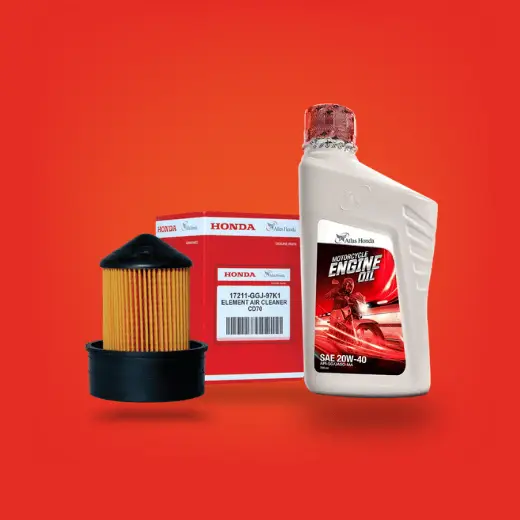
Before you ever twist a tuning screw, you must inspect your filter. We highly recommend upgrading to a premium Excel air filter.
An Excel air filter uses high-quality paper material that traps microscopic dust while allowing maximum, unrestricted airflow into the carburetor.
When to Stop Tuning and Start Replacing
Carburetors do not last forever. Inside the metal body are tiny brass jets with microscopic holes.
After years of vibrations and flowing petrol, these tiny brass holes become scratched and enlarged. The mixture screw needle also develops deep wear grooves.
When these internal brass parts wear out, accurate tuning becomes mathematically impossible. Your bike will just drink petrol uncontrollably.
Fuel Average Improvement
Measured in km/l Based on Carburetor State
If a good tuning session does not push your average past 55 km/l, your internal
brass jets are likely worn out and require replacement.
If your tuning attempts are failing, you do not need to buy a completely new carburetor assembly. You simply need to rebuild the internal components using Atlas Honda genuine parts.
A fresh carb kit replaces the damaged brass jets, completely restoring factory fuel flow. This is the ultimate way to improve bike fuel economy on an older motorcycle.
FAQ – Motorcycle Carburetor Tuning Answered
Q1: How many turns out should a CD70 mixture screw be? The standard CD70 air-fuel mixture setting is generally 1.5 to 2 full turns outward from the fully seated position. However, every bike is slightly different due to engine wear, which is why listening to the RPM sweet spot is always the best method.
Q2: Does changing the exhaust affect my carburetor setting? Yes, absolutely. Changing to a free-flow aftermarket exhaust drastically alters the engine’s backpressure. You will need a new Motorcycle Carburetor Tuning session to adjust the mixture, or your engine will run dangerously lean and overheat.
Q3: Why does my bike shut off when I open the throttle quickly? If the engine dies or hesitates the second you twist the throttle hard, it is usually a sign of a very lean mixture. It can also indicate that your main internal brass jet is clogged with dirt and needs cleaning.
Q4: Can I tune my bike using “katcha” (adulterated) petrol? No. Adulterated or mixed petrol burns inconsistently. If you tune your bike using bad petrol, the setting will be completely wrong once you finally fill up with high-quality, clean fuel. Always tune with fresh petrol.
Q5: Do genuine Atlas Honda carb kits fit older motorcycle models? Yes. Whether you ride a 2010 model or a 2024 model, we stock the exact Atlas Honda genuine parts designed for your specific carburetor body. A fresh genuine kit is the fastest way to lock in a perfect CG125 carburetor setting.
Smooth Rides and Maximum Savings
Patience is the ultimate key to success here. Finding that perfect balance between air and petrol takes a little practice and a careful ear.
When you achieve the perfect mixture, the results are incredible. A perfectly tuned motorcycle runs significantly cooler, accelerates with zero hesitation, and drastically extends the overall life of the engine block.
Most importantly, knowing how to improve bike fuel economy yourself saves you thousands of rupees at the petrol pump every single month.
However, we understand that working on delicate engine components can be intimidating. If your brass jets are stuck, or you simply prefer the peace of mind that comes from a professional touch, let our master mechanics handle the precise adjustments for you.
 No products in the cart.