
Your mighty CG125 used to roar with a crisp, clear sound. But now, it is leaving a thick cloud of white “dhuan” at every traffic signal. You twist the throttle, but the pickup is dead, and the people behind you are choking on your exhaust fumes. It is an embarrassing and frustrating problem for any proud rider.
When your motorcycle gives continuous white smoke, it means your engine is burning its own lubricating oil. The only way to permanently fix this is to perform a proper Honda CG125 engine overhaul.
Doing a top-end rebuild requires mechanical skill, but the real secret to a 10-year engine life is not just the labor. The secret is using 100% genuine Atlas Honda engine parts right from the very beginning. As a mechanic with over 15 years of experience rebuilding engines in Faisalabad, I have seen hundreds of bikes destroyed by cheap, fake parts.
Today, I am going to guide you through the exact “dhuan khatam” process so you can understand what your mechanic is doing and ensure your bike is repaired perfectly.
Diagnosing the Smoke: Why is Your CG125 Burning Oil?
To stop bike smoke, you first need to understand why it happens. Your engine has two main sections. The bottom half holds the engine oil for lubrication. The top half is the combustion chamber, where petrol and air mix to create power.
These two sections must stay completely separate. When the barrier between them breaks down, engine oil leaks upwards into the combustion chamber. When the spark plug fires, it burns the petrol along with the leaked oil. Burning oil creates that thick, terrible CG125 white smoke.
Here is a breakdown of what exactly fails inside your engine to cause this problem.
Main Causes of White Smoke in a CG125
In the vast majority of cases, worn piston rings are the primary reason
oil escapes into the combustion chamber and creates heavy smoke.
The Golden Rule: NEVER Use Fake Parts Inside the Engine
I always tell my customers the harsh truth. You can sometimes get away with installing a cheap aftermarket indicator or a local footrest. However, putting fake parts inside your engine is an absolute death sentence for your motorcycle.
Inside the cylinder, your engine is running at 8000 RPMs. It is dealing with thousands of explosions every single minute. The heat and friction are extreme.
When you use local “A-copy” rings or a fake piston, they cannot handle this heat. A fake piston will expand too much and seize tightly inside the cylinder block. This will lock up your rear wheel while you are riding and completely destroy the engine casing.
To guarantee a safe Honda CG125 engine overhaul, you must rely on the superior heat resistance and precise engineering of genuine Atlas Honda engine parts. They are built to endure the extreme temperatures of a 125cc engine without warping or melting.
Step 1: Disassembling the Top End (Head and Cylinder)
The first phase of the overhaul is the teardown. A proper CG125 piston ring replacement requires stripping the bike down to expose the engine block.
First, we remove the seat and the fuel tank safely. Next, we unbolt the silencer pipe and the carburetor to free up the engine head. Before opening any engine covers, we completely drain the old, burnt oil. It will likely be very black and low in volume because the engine has been burning it.
We then open the tappet cover and remove the long cylinder head bolts. Carefully, we lift off the cylinder head (which holds the valves) and pull off the main cylinder block.
This finally exposes the piston attached to the connecting rod. The piston will usually be covered in a thick, hard layer of black carbon crust—clear proof of burnt oil.
Step 2: Replacing Piston Rings and Valve Seals (The Core Fix)
This step is the absolute core of the repair. If done correctly, it will instantly stop the CG125 white smoke.
Installing the Piston Rings
The piston rings wrap around the piston. Their job is to scrape the oil down and maintain tight engine compression. When they become weak or loose, smoke escapes.
We remove the old piston and rings. Depending on whether the cylinder block needs lathe (kharadiya) work to remove scratches, we install either a standard or an oversize genuine piston. The new rings are carefully spaced out so the gaps do not align, ensuring a perfect, oil-tight seal. This meticulous CG125 piston ring replacement is what restores your engine’s lost compression and power.
Replacing Valve Seals
The valve seals are tiny rubber caps located inside the cylinder head. Over time, engine heat makes this rubber hard and brittle.
When you park your bike for the night, oil slowly drips past these hard seals and pools onto the engine valves. When you kick-start the bike in the morning, you get a massive cloud of smoke. Replacing these seals is mandatory during any rebuild to ensure long-lasting results.
Step 3: Gaskets, Packing, and Reassembly (No Leaks Allowed!)
Once the new piston and valve seals are installed, we must put the engine back together. This brings us to a highly critical rule: you can never reuse old paper or metal gaskets (commonly called packing).
When you open an engine, the old packing tears. If you try to use liquid sealant to fix a torn gasket, it will leak oil onto your boots within a few days.
Even worse, you must never use cheap local packing. Local packing is made of poor materials that melt inside the hot engine. Small pieces of melted packing will break off, float into the oil, and completely clog the engine’s internal oil pump. A clogged oil pump leads to instant engine death.
Always use a genuine motorcycle engine rebuild kit that contains perfectly cut, heat-resistant Atlas Honda packing.
Step 4: The Break-In Period (Running-in Your New Engine)
Your Honda CG125 engine overhaul is not finished when you leave the workshop. The first 1,000 kilometers are absolutely critical. This is called the break-in or “running-in” period.
The new metal piston rings need time to gently scrape against the cylinder walls and create a perfect, custom fit. If you race the bike immediately, you will ruin this delicate process.
Follow these strict rules for the first 1,000 km:
- Do not cross 50 km/h under any circumstances.
- Do not carry heavy loads or ride double-sawaari (passengers). Keep the engine load very light.
- Change the engine oil after the very first 300 km. The break-in process naturally creates microscopic metal shavings. You must flush these out immediately to protect the new parts.
Engine Lifespan
Based on Break-In Behavior (Years)
How you treat the engine during the first 1,000 kilometers dictates whether it will last a decade or seize in a year.
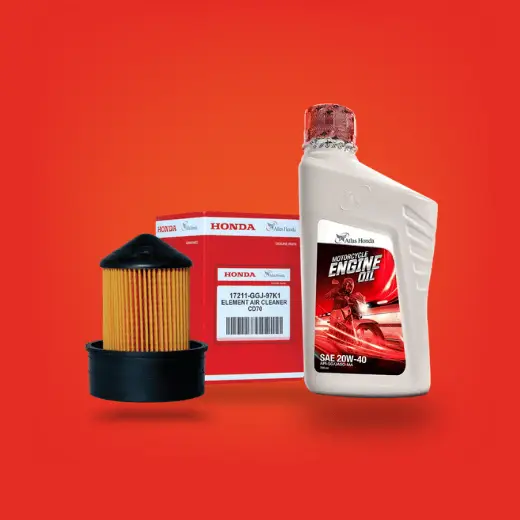
To ensure those metal parts glide smoothly without overheating, you must use proper lubrication. Never pour unbranded oil into a freshly rebuilt engine.
FAQ – CG125 Engine Smoke Answered
Q1: How much does a Honda CG125 engine overhaul cost? The total cost is divided into two parts: the spare parts and the mechanic’s labor. While genuine parts cost slightly more upfront than local copies, they save you thousands of rupees long-term. A genuine overhaul lasts years, while a fake overhaul fails in months.
Q2: Is black smoke the same as white smoke? No, they are completely different problems. Black smoke means your carburetor is burning too much petrol and needs tuning. CG125 white smoke (often with a blue tint) means your engine is burning internal oil and requires an overhaul to stop bike smoke.
Q3: Do I need to change the connecting rod (goda) too? Not always. A top-end overhaul only involves the head and cylinder. You only need to replace the connecting rod and bearings if you hear a heavy, loud knocking sound coming from the deep bottom center of the engine block.
Q4: Why did my bike start smoking again after only 2 months? If the CG125 white smoke returned quickly, it is almost guaranteed that the mechanic used cheap local rings, or you did not follow the strict 1,000 km break-in period. This is why using a trusted motorcycle engine rebuild kit is mandatory.
Q5: Can I get all these genuine overhaul parts delivered to my mechanic? Yes! We understand finding authentic parts in local markets is hard. You can order all your genuine Atlas Honda engine parts and Atlas Honda genuine oil through bikesaman.com, and we will deliver them directly to your door anywhere in Pakistan.
Restoring the Legendary Roar
A proper “dhuan khatam” overhaul does more than just stop the smoke. It completely restores the legendary power, pickup, and aggressive sound of your Honda CG125.
It takes patience, exact CG125 piston ring replacement procedures, and an absolute refusal to use fake components. When you rebuild your engine the right way, it will reward you with years of flawless, thrilling rides across the city.
If you are intimidated by the technical work and want the peace of mind that your engine is being built by true experts, let us handle it for you. We use the best parts and the most experienced hands in the business.
 No products in the cart.